Resistance, territory, and the dilemmas of contemporary democracy
DOI:
https://doi.org/10.25247/2447-861X.2025.n265.p279-283Keywords:
Resistance, Territory, Contemporary Democracy, Social Movements, Epistemologies of the SouthAbstract
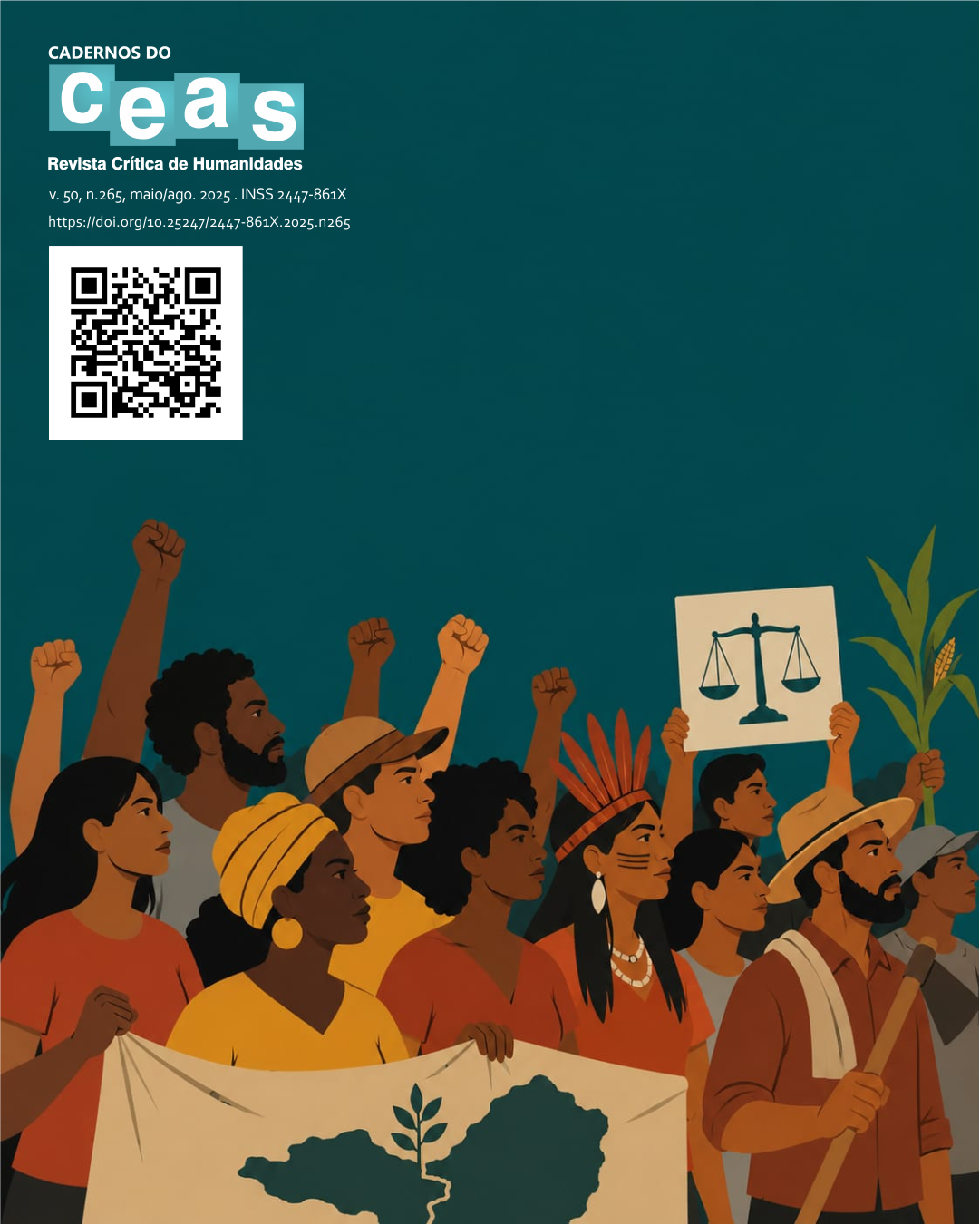
This Presentation introduces volume 50, number 265 of the journal Cadernos do CEAS, focusing its core analysis on the binomial "Resistance - Institutionalization" in the face of democratic regressions and contemporary asymmetries. Gathering ten articles from spontaneous demand across Political Science, Education, Law, and Health, this issue maps the latent tensions between sustainable life projects and dominant power structures. The critical framework is structured around three integrated thematic lines: Epistemologies of the South and Territorial Struggles, which examines quilombola and indigenous original rights and the agroecological transition as cultural resistance; Public Management, Social Movements, and the "Style of Activism", centered on the self-management practices of collectives and the precarious impacts of corporate logic on public health ; and Liberal Democracy and the Rise of Right-Wing Populism, which investigates global and local threats stemming from disinformation, moral panics, and political resentment mobilized by the far-right. Ultimately, the volume highlights a landscape of social and discursive disputes, pointing to pathways anchored in the intersectionality of struggles and the validation of traditional knowledges against the exhaustion of current capitalist models.
Downloads
References
CUNHA, Joaci de S. Resistência, território e os dilemas da democracia contemporânea. Revista Cadernos do CEAS, Salvador/Recife, v. 50. n. 265, maio/ago. 2025. DOI
Downloads
Published
How to Cite
Issue
Section
License
Copyright (c) 2025 Joaci de S. Cunha

This work is licensed under a Creative Commons Attribution 4.0 International License.
Autores que publicam nesta revista concordam com os seguintes termos:
- Autores mantém os direitos autorais e concedem à Cadernos do CEAS o direito de primeira publicação, com o trabalho simultaneamente licenciado sob a Licença Creative Commons Attribution que permite o compartilhamento do trabalho com reconhecimento da autoria e publicação inicial nesta Revista.
- Autores têm autorização para assumir contratos adicionais separadamente, para distribuição não-exclusiva da versão do trabalho publicada nesta revista (ex.: publicar em repositório institucional ou como capítulo de livro), desde que reconheça e indique a autoria e a publicação inicial nesta Revista.
- Autores têm permissão e são estimulados a publicar e distribuir seu trabalho online (ex.: em repositórios institucionais ou na sua página pessoal) a qualquer momento depois da conclusão de todo processo editorial, já que isso pode gerar alterações produtivas, bem como aumentar o impacto e a citação do trabalho publicado (Veja O Efeito do Acesso Livre).